Tuesday, March 29, 2011

Thoughts on Disciplines and Food


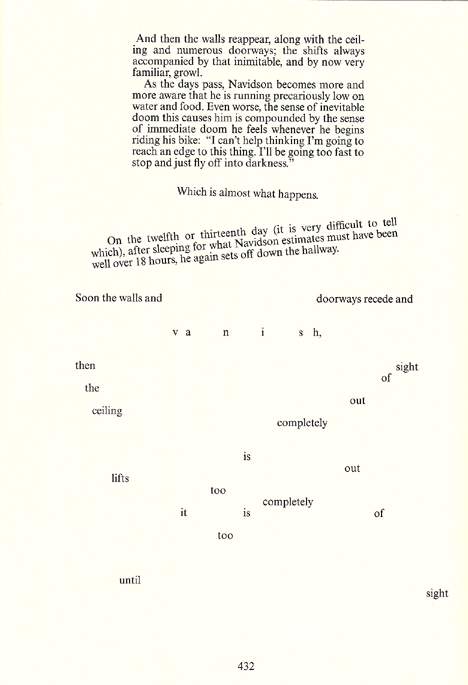
I am so thankful that we had the discussion in class about the readings. It made me feel much more comfortable about it. When reading about science, I just got anxious and uncomfortable. So I was glad I was not alone in this uncomfortableness. Talking through the readings, made it much more accessible to me. I thought it was really interesting to also sit in the car with Matt, Ellee, and Riley on the way to the house. Hearing Ellee and Riley, as science majors, talk about how they never realized how difficult science can be for some people, made me think about my own disciplines. While my Latin American studies major doesn't seem to inaccessible being that it is an IDS major, my English major does. There are a lot of people who don't like reading books, my sister included. I don't understand how people can be like that but they are. Also people who read books don't necessarily read books in the same way I do. I read them in somewhat analytically, from my years of practice, in many ways that a scientist reads a biology article and probably dissect it. Last semester in my English capstone, Lauren, Rena and I among others, tried to master the book House of Leaves. Many of my friends, English majors and not, feared this book. But I took it head on. In the same way, I feared science classes, but some of my live for them. So I think the readings from last week, while difficult especially Kuhn and his “The Nature and Necessity of Scientific Revolutions,” I was better able to understand Stuart Kauffman's Breaking the Galilean Spell.

Michael Pollan is a pretty interesting fellow. I do have to agree that with some of the Slate review says about his book. I am actually interested into what he said considering when I tried watching the documentary Food Inc.
I somewhat play the ignorant fool when eating. I am starting to eat healthier. But it is hard to be incredible detail about what goes in your food. I plan to eliminate gluten from my diet but it will be a slow and difficult process. Right now, without a car and time to research non gluten meals/food, its hard to quit it but it is on my plan to do it. His second talk reminded me a lot of certain parts of Jared Diamond's Guns, Germs and Steel.

I don't think that I will be able to kill my own food but I hope to one day have a garden that I grow vegetables in and eat them. I am grad he is drawing attention the fact that we may eat organic food, but where it comes is also important. Some of it is imported, which cost energy. Lyle Estill talked about similar issues in his talk. 17% of our fossil fuel goes to our food process which is outstanding, as well as we eat four tons of carbon a year.

Cara Craig was a pretty awesome girl. I love hearing her history about how she got to where she is. Her very nontraditional method through college to get to her very nontraditional career all seemed very logical but I am glad we got to share the class with her.

Tuesday, March 22, 2011

Struggle


So I want to say that the five minute teaching sessions make me love our IDS even more. I feel like that an important aspect of this class, like FYE is to bond as a unit and get to know each other. We learned, or attempted to learn a song, a dance, a whistle, kick our tongues and a bit of Italian. I feel this class makes sense at Guilford and part of the reason why I was drawn to this fabulous school. I grow closer and closer to the people who I share at least four hours a week with. These people bring energy and excitement to the readings and experiences that our class go through. Replace any of us with someone else, and who knows what the class would be like. It would not be the same, we all bring ourselves out through the readings. I am super excited for our trip to the beach. I feel like we will have some great bonding experiences, building doredagos and whatnot.

Thomas Kuhn seems like an interesting fellow. It seems interesting his argument about how science works. I mean it makes sense that science goes through evolutions and paradigm shifts. I am rather confused about the reading a bit. I am hoping that some of my classmates can help me better understand the readings. It went a bit over my head, unfortunately.

Again, as a man of little science, I was kind of confused by Kaufman. But I did enjoy when he said that
"Reason itself has finally led us to see the inadequacy of reason. We must therefore reunite our full humanity. We must see ourselves whole, living in a creative world we can never fully know. The Enlightenment’s reliance on reason is too narrow a view of how we flourish or flounder. It is important to the Western Hebraic-Hellenic tradition that the ancient Greeks relied preeminently on reason to seek, with Plato, the True, the Good, and the Beautiful. The ancient Jews, living with their God, relied more broadly on their full humanity."

I think that this is a very good discussion evolution of the modern thought with science and religion coming to conflict with the example of how Galileo was punished for his findings in a strict Christianity setting. Kaufman brings in an interesting point about how they should have separation and that we deserve to have a special place for the God(s). I kind of understand his points more than I did Kuhn. But not easily. I hope and will probably learn a lot from my peers on the manner.

Tuesday, March 15, 2011

Kiss the Messenger


In my FYE, I was fortunate to have been introduced to the wonderful world of Wendell Berry’s mind. We read most if not his entire book, Another Turn of the Crank, under the trees in the woods. It was really informative, and helped me better understand the mentality of what I would later recognize as Guilford’s values. He puts a major emphasize on staying local, like Guilford does. He sees it as a great way for to make a sustainable economy. I saw the correlation between what he was writing and how the Greenleaf functioned as a co-op. So as I was first introduced into his principles and ideas, I was being introduced to an idea of where Guilford’s principles here and lie.

I really enjoy and appreciate how passionate Berry is about the issue of localization. He is able to give the movement, though he would not enjoy me using that word, a lot of force by arguing in numerous fashions all the benefits for the cause. I do believe that buying locally and organically are great things and I am really glad that Meriwether Godsey does it but at the same time there has to be needs for some kind of the movement because not all produce is capable of growing in every region. Also, in the current supermarkets and stores, the price differential between local organic foods and the generic corporate versions is enough that most people can’t afford or don’t want to spend the money on them. As a student, I know that I do try to buy more local and organic products but there are times where it is like a three-dollar differences. So, in the goal of getting more to buy and support local, there must be a way to get the prices down. It is the same reason people go to McDonald’s, instead of a healthier alternative.

His essay about buying a computer is a very interesting one. It made me feel slightly guilty about reading his works on a computer and writing a response. Buy at least I am writing my response in daylight. Berry is a lucky man that he could not write any better or easier with a computer than with a pencil in hand. I am not gifted in this way and thus I am envious of him. My handwriting is horrible, so typing everything is always my priority. Since this essay was written in 1987 before computers became super mainstream like they are now. I wonder if he wrote an update of this essay what he would say now. Computers are everywhere and almost to avoid. Would he be able to make through life in the same way he was capable of in 1987?

Monday, February 14, 2011

Jack Sinclair: ENFP


First of all, I really enjoyed the change in venue. Not that there is something wrong with the old one, I just think that is incredibly refreshing to explore more of the woods that we are blessed to have. Well I have been a good amount time wandering throughout them, I always feel like I am learning more about them. I hope that we can have more classes exploring these woods.

I learned a good number of information from Mary Edith Alexander. Her talk was really informative. Even though my choice of direction in life is different than hers, it is also different than probably most art majors. So it gave me some confidence in that I can still do some art work without it being in the typical environment.

The Lyle Estil talk was pretty awesome. I had no real knowledge of who he was besides working in biofuels. So it was pretty awesome to learn about how he got his start in the business and all the ups and downs that Piedmont Biofuels has experienced. I also found it interesting his take on how he ended up being invited to speak at Guilford. He seems bitter about the fact that BB&T requested his speech. He seems to be pretty against the capitalistic market that brought him to be a part of the series he is. So I thought that was pretty entertaining to hear him to rant and ramble.

Now onto the different intelligences by Howard Gardner. Gardner makes me really happy that he is anti-IQ test. I have always been intimidated by the fact that this test exists. I always wonder who are these people that judge whose smarter than others. It felt severely outdated and just misplaced in the way our society works these days. So Gardner put my mind at ease. I liked the different intelligences that he discusses. I could relate some a lot better, though when I saw musical I got disheartened again because I have no musical talent minus an appreciation for it. There are major ramifications to Gardner writing this. I really hope people took him seriously because I feel like a much better me when I read him. As an ENFP in terms of Meyer-Briggs, I am much more in touch with feelings instead of thinking and I think that Gardner would appreciate that I am comfortable with that about myself.

Sunday, February 6, 2011

Your Hand in Mine


Words of Wisdom before I begin


“When you arise in the morning, think of what a precious privilege it is to be alive – to breathe, to think, to enjoy, to love.” ~Marcus Aurelius


“I felt my lungs inflate with the onrush of scenery—air, mountains, trees, people. I thought, ‘This is what it is to be happy.’” ~Sylvia Plath


"Life is wonderful. It's a gift to be alive, to see the sun and breathe the air. And there isn't really anything else." – Michael Crichton


The further that I dive into David Abram's book, the more I am becoming self-aware in different facets. It reaffirmed my belief that I need to spend more time outdoors. I try to escape the noise of the world and wander into the wilderness just to feel that overwhelming aura, for lack of a better word. Late Saturday night, as I made the journey from campus to my apartment, I saw a family of deer outside of the gym. And it made me so happy to see them, their presence is always unexpected, but much appreciated because the walk home is usually boring and filled with cars. When nature surprises me with crossing paths with a beautiful creature or finding beautiful country, it fills me with uncontrollable joy. Reading Abram, as well as Dillard, has really confirmed and cemented this feeling inside of me. Its hard in college, when we are distracted by social life and homework, to remember the importance of leaving the chains that constrain us and going out in the world and appreciated all that has been given us by Mother Earth. I really appreciate the people who are in this class appreciate the beauty of the world (I am quite aware that people who were not interested in this belief would not be in this class). But I did not know some of the people in the class before this, but I feel a connection with my peers through the bonds of nature. So few classes have I felt such a bond with the people I share them with, that I am really enjoying this rarity. So if any of yall read this, Thank You and I am excited for the rest of the journey in front of us.

Now that is out of my system , I really enjoyed what Abram said in these two chapters. He finds a way to discuss things that I would have no real interest in before hand. I never had thought about the different layers of saying the word, "Wow." Maybe on a deep sub-conscience level did I come across the idea that I am not only showing feeling of amazement but complimenting whatever that is the cause for the Wow. Abram just has a beautiful way of telling us all these different things about our nature. My eyes are more open to the world than they were previously to this book.I found it was also interesting about how living speech is through gesture. It makes sense since a lot of what we say is through our hands. I can't speak for other types of languages, but my experience with Romanic languages is that half of what is said is in the hands. So its important that when talking about languages, that he acknowledges that. Also it's important that he mentions it because when we are babies, we are not able to comprehend words so through the "living speech," we learn about food, sun, family. Our primary ideas on life come from the "living speech" that is taught to us by our family and friends. What he said about the color red was interesting. When he said it, it sounds obvious, but let's be honest, it wasn't. "It is no more true that we speak than that the things, and the animate world itself, speak within us (pg. 85)." Wow. I love this line, and up to this moment. It may be my single most favorite.

I really appreciate all the knowledge that the Leave no Trace site provided us. I try to keep a lot of this stuff in mind when I go out into the wilderness. While a lot of them were obvious tips, not all of them are ones you think so having this really awesome site helped further them into my conscientious stream. I definitely got more advice though that I plan to keep with me on future journeys into nature. I think these tips will be of great help for the trips.

On Saturday, I had my interview for the paper with a photographer/photo editor/media specialist named Maggie Soladay. I not exactly sure how I stumbled upon her portfolio, probably through this organization she is partnered with and I would love to get involved with called Salaam Garage. Anyways, she is an awesome person. Normally I am uncomfortable talking on the phone, which when I heard Sam's advice it resonated with me, but she and I talked for practically an hour and I could this flame of excitement burning and getting bigger and bigger inside of me. She told me about her journey to where she is now, and some important lessons along the way. She gave me a new name for what my dream job would be, humanitarian media.

Monday, January 31, 2011

Baraka


As we sat by the "big tree," discussing David Abram's book and the connection between an ant, and a human and everything in between, all I thought of a film that I recently got in my possession, Baraka. The title is translated to mean "the thread that weaves life together." The film goes from pan-shots of natural landscapes, to an airfield, to members of the Maasi tribe to animals. There is not a single word spoken, minus some chanting. The point of this film is to show that the world is all connected, no matter where, or who or what we are. I feel like that Abram's would find the film as a spiritual companion of his book, at least up to the point that we have gotten up to.

Abram's stories are written in similar fashion that Dillard's are, and because of such, I felt the same moment of WOW. He has had some crazy life experiences and has a way of words to share them. One of my peers though expressed some discomfort with Abrams though in that he is looking at the world with a universialist view and they felt that it was unfair. They were not happy about the handling of the ants and Abrams experienced it in a less than respectful manner (I am probably not representing this conversation well, but I tried my best). I personally know nothing in depth about religions in that region of the world, so I am not going to comment on it. But I do see the argument that this person present as a valid one.

I have enjoyed the connection that Abrams feels with his surroundings. He seems to understanding of the spirits. His experience of the cave, it would take a special mindset and openness of the surroundings to feel that. On page 22, I thought it was interesting on how he said that we have to escape the way we see things in our modern technological lifestyle and go out and isolate ourselves to see the world for what it is. We will also find ourselves in these moments too. Jack Kerouac wrote once that


“No man should go through life without once experiencing healthy, even bored solitude in the wilderness, finding himself depending solely on himself and thereby learning his true and hidden strength.”


This is in complete agreement with when Abrams when he talks about shutting ourselves off to other voices but our own, and the best place to make this separation is in nature, in solitude. I was glad to see some redemption in that he respected the voices of the animals even if he (or we) can not necessarily hear them.
We should not rule out the voices that we are not able to hear. It is too ignorant say that they have no voice. We used not to be able to understand outer space, but in 1969 we put a man on the moon. So we should accept there are things we don't understand but still exists.

On page 33, when he talks about the life and the world's life being intertwined, I could not agree more. Our perception on everything comes from us first. Everything we do affects the way we see, read, deal etc. We are the only one who can really understand the world that we experience. No one can truly say that they see the world I do, unless they have experienced everything I have. There might be some overlap but we are all unique. This is expressed later when Abram talks about the life-world and how different cultures = different life-worlds.

It was really interesting to hear Sam and Fabio talk about their journey's post Guilford, especially in comparison to Andrew Breuing (Bru) and the other recent alum (I am blanking on his name). Fabio was able to start with what he wanted to do right out of the gate, even getting a head start while at Guilford. There was a major contrast between what happened with Fabio and Bru. So I thought that was pretty interesting. I have to agree with a good number of my peers on some of the frustration that was expressed from the Sam and Fabio talked. I definitely felt angst even as I have started the job application process only a few weeks ago. It reiterated a lot of what people who I have talked to about jobs have said. When Sam and Fabio talked about the importance of networking, I thought to myself "friend speaks my mind." I have been trying to network like crazy. I am trying to find a job before graduation, so I have a destination of where to go. Where my parents are, I have a distanced relationship with. I have grown up with a messed up version of what home is to me. I frequently don't know where home is for me. So I am hoping that where I find a job after Guilford becomes my home.

I thought what Fabio said about living below your means was really interesting and good advice especially in this economy. This is not the time to be flashy in our lifestyles. I don't want to generalize but I do thinking that being at Guilford does help us understand that message better than possibly at other schools. Our core values promote this message. For as much as people did not take Sam's advice, I thought and appreciate that his definition of success was heavily focused on his individual happiness. I think that this is important and apply it to my own life. A lot of Guilford would probably agree this. I also love his baseball analogy. I am a lover of baseball and that the idea of hitting .400 (4 out of 10) is almost guaranteed to get you in the hall of fame is deeply applicable to life. Success is always come with some failures, because without the fails in life, we never get true perspective.

Monday, January 24, 2011

The Day that Horses Came Out Walked Through the Woods


“Who are you whom I so faintly hear? Who urge me ever on? What voice is this that speaks within me... guides me towards the best? We shall make a new start. A fresh beginning. Here the blessings of the earth are bestowed upon all. None need grow poor. Here there is good ground for all, and no cost but one's labor. We shall build a true common wealth, hard work and self reliance our virtues. We shall have no landlords to reack us with high rents or extort the fruit of our labor.”
- The New World

First of all, I want to respond to Van Jones' speech from last week. Wow, he is one hell of a speaker. He has the right blend of humor and putting you in your place. I was either laughing really hard, or thinking "friend speaks my mind." When he talked about WHole Foods, I couldn't agree more. "We shouldn't have to go down to Whole Foods to get our food," said Jones. "It seems like a whole paycheck, and you come out with one strawberry. I'm healthy but I'm hungry." In my mind, this is what makes an effective speaker. He knew his audience and went with it. The way he spoke about how our generation has to continue for hope. He was one of the smartest guys I have seen speak at Guilford. He made seem like it was such an obvious decision that we should become more environmentally aware, no matter what social, political or economical group we are a part of. This is true, and if only more people would listen. I thought it was really interesting how he talked about how we as humans have to be sustainable with ourselves and our bodies before we can focus on the planet. I wish I could have been a part of the sit down dinner to talk to him more.

In regards to the reading about hypothermia, I learned a lot. I never had thought too much on the different ways that people lose heat and more. I am definitely more prepared to be in the cold. So while I would much prefer to be in warmer weather, I will take this reading in mind when thinking of what I will wear out hiking and on backpacking trips. I have printed off this reading so I have it to make sure I am safe. Some of it was logical and others were not.

The Moral Instinct article was really interesting. Pinker is a really interesting fellow who has a lot to say about many different things. I had learned a little a bit about him in high school. How he started the article was an effective way. I naturally had put Mother Teresa as more admirable than Bill Gates (though I had thought Gates has certainly redeemed himself) or Norman Borlaug (I had no idea who this man was previously). This made me question whose and what morals are the ones that should be valued. While Gates, as head of Microsoft has lots of issues with morality (anti-trusts and what have you), he along with Warren Buffett and others have made significant strides in trying to rid the world of numerous diseases that plague the planet. Its interesting how Pinker discusses the evolution in what society determines is moral and immoral. Smoking was not only accepted but pretty much expected in society, our presidents smoked publicly (Obama only recently has really quit), but soon the effects of tobacco showed, and the view on smoking did a 180 degree turn that was so fast that the country is still catching up. Its hard to place morals on others because a lot of our morals come from our upbringings. Someone who is born very little money is likely to have a very different moral code than that of someone who was born with way too much money. The question is though, how would they both deal with the Trolley Problem. I like to believe that there are some universal morals, but frankly there are times when I am not sure. There is definitely not a hundred percent universal morality. I am going to have agree with some of what Dawkins claims in the "Selfish Gene." I have to agree that it takes genes that are self motivated to get ahead to survive in the Darwin society. There are reasons that certain traits and genes have survived over others. Its human nature to act in a Darwin fashion, so it makes sense that at our most basic level we are still selfish.

In the fake discussion between Steven Pinker and Richard Dawkins, they talk about the idea of the two souls. There is Soul One that there is something that can't be seen but something that people believe that exists. This is the soul that they argue has been killed by science. This is due to the fact that science has to prove the existence of things while soul two, which is "Intellectual or spiritual power. High development of the mental faculties. Also, in somewhat weakened sense, deep feeling, sensitivity." This fake discussion says that science is not able to kill the soul two. This may be because it relies on science to exist. It is not trying to deny science, but trying to coexist with it. Often, there are times that people who believe in the existence of Soul One but they deny the presence of science. They see science and faith being incompatible. But this is not true. We need to get away from this separation and come together to make Soul One. I do believe there are these two souls though, I just think we need to accept Soul One by coming together as humans, not as science vs. believers. If we can accept Soul Two, lets accept Soul One.

In regards to Steve Jobs's commencement speech, he had very unique insight to share with college graduates. He starts off talking about his reasoning for dropping out of college. I never had the thought of dropping out of school, but the way he describe what he "stumbled into" seem the best reason not to go to college. He was able to learn about these different things that interested in him, despite him previously going to a liberal arts school. He used the skills that he learned from classes that he just appeared at, instead of being registered, and changed the foundations of societies with these skills he would learn. Connecting the dots later, instead of before hand, makes so much sense. At an early age, I was raised on Greek mythology. From this, I learned about fate, and destiny, so I came to the idea that we make our own choices but there are some moments that bring it all together, similar to connecting the dots later instead of trying to figure out what is next. I have a pretty good idea of what I want to do, but I certainly do fear on the idea of settling. I hope if I do have to settle, I plan to make it only temporary. I want to travel the world, capturing the beauty of it, and yes I want to convince someone or some organization to pay me to do this. I am interested in seeing when I get to this level. I know I have some steps to make before I get to make this but this is the destination that I hope to arrive to.

Mary Oliver defines success in her poem, The Summer Day:

"I do know how to pay attention, how to fall down into the grass, how to kneel down in the grass, how to be idle and blessed, how to stroll through the fields"

Oliver is saying success means to be present and enjoy the world for what it is. To take time to just walk in the fields, feeling the tall grass against the finger tips. That is success because that is what it means to be alive, and the most successful thing we can do, is breathe and live. So go outside and enjoy the moments of true beauty in nature. I would agree on Oliver on this definition of success. There are times when I am in nature, that I am lost in the beauty and feel at peace. I understand the great nature and transcendentalist, among other movements, of writers. I get so engrossed, that I do what is unnatural for me, and put down the camera. Because in these moments of success, my passion of photography can not capture this feeling no matter what. We as humans must value these moments. Van Jones touched on this as well in different ways but in the same principle. We should allow ourselves to break free of distractions of our society and go out and enjoy what has always been there. This is what Oliver sees as success and why I agree.

Annie Dillard appears to have been a creative person most of her life. She found creative ways to give people money as a child. As she got older, that creativity blossomed into her writing. She was able to share knowledge and views of the world with her writing. She is pretty successful at that. She is able creatively tell us stories that help us better understand our world. We should find creativity in the world, some do it through writings, others through art, and others find different means to define creativity in their lives. Its important to have creative in our lives, no matter what the outlet that we use is, because it allows us to escape from the rigidity of life. We can break free of the norm and try something new. It allows to better understand ourselves, while figuring out the world that we have surrounded ourselves in.This is how Dillard is using creativity, and how I have to agree that it is important to our worlds.